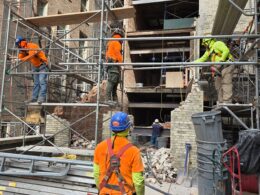





Demolition in New York City presents challenges that go far beyond traditional construction work. Dense neighborhoods, aging infrastructure, limited access, and strict regulations require a disciplined and technically informed approach.
Andrew Horan Alba Services operates within these conditions by applying careful planning, experienced execution, and responsive site management to each project.
The Complexity of NYC Demolition Sites
Urban demolition sites are often constrained by:
- Tight lot lines and limited staging areas
- Adjacent occupied buildings
- Active sidewalks and roadways
- Overhead utilities and scaffolding systems
These constraints demand methods that prioritize control, coordination, and safety at every phase of demolition.
Managing Public Interfaces and Pedestrian Safety
In a city environment, demolition frequently occurs alongside public activity. Sidewalk sheds, scaffolding, and barriers are essential to protect pedestrians and nearby properties.
Andrew Horan Alba Services addresses public interface challenges by:
- Maintaining secure work zones
- Coordinating material handling under scaffolding
- Managing access points for workers and equipment
- Ensuring clear separation between public and active work areas
This approach allows demolition to progress while minimizing disruption to surrounding areas.
Structural Uncertainty in Older Buildings
Many NYC demolition projects involve aging structures with unknown or altered conditions. Hidden modifications, deteriorated materials, and undocumented changes are common.
Experienced crews help manage these uncertainties by:
- Monitoring structural behavior during removal
- Adjusting demolition sequences as conditions are revealed
- Coordinating with engineers when required
- Maintaining stability throughout phased demolition
This adaptability is critical to maintaining safety and control.
Equipment Selection for Confined Work Areas
Urban demolition requires equipment that matches site constraints. Oversized machinery may not be feasible, while underpowered tools can reduce efficiency.
Andrew Horan Alba Services selects equipment based on:
- Access limitations
- Structural conditions
- Noise and vibration considerations
- Precision requirements
The right equipment supports efficient progress while protecting adjacent structures.
Debris Management and Site Cleanliness
Material removal is a major logistical challenge in dense environments. Poor debris handling can cause delays, safety hazards, and public disruption.
Effective debris management includes:
- Controlled material staging
- Timely removal to prevent congestion
- Maintaining clear access routes
- Coordinating haul-off schedules
A clean and organized site supports both safety and productivity.
Regulatory Awareness and Compliance
NYC demolition projects operate under strict regulatory oversight. Permits, inspections, and safety standards must be met consistently.
Andrew Horan Alba Services integrates compliance into daily operations by:
- Following approved demolition plans
- Maintaining documentation and site records
- Aligning work with city requirements
- Coordinating inspections as needed
This proactive approach helps projects move forward without unnecessary interruptions.
Collaboration with Project Stakeholders
Urban demolition often overlaps with other construction activities. Close coordination with owners, engineers, and general contractors is essential.
Effective collaboration allows teams to:
- Align demolition schedules with project milestones
- Adjust sequencing to support follow-on work
- Address site challenges quickly
- Maintain overall project momentum
Conclusion
Urban demolition in New York City demands adaptability, planning, and experienced execution. Each site presents unique challenges that require thoughtful solutions rather than one-size-fits-all methods.
Through technical understanding, disciplined execution, and responsive site management, Andrew Horan Alba Services navigates the complexities of NYC demolition while maintaining safety, compliance, and reliability.